

MAINTENANCE & AVAILABILITY PLANNING
Plan maintenance. Protect availability. Cut downtime.
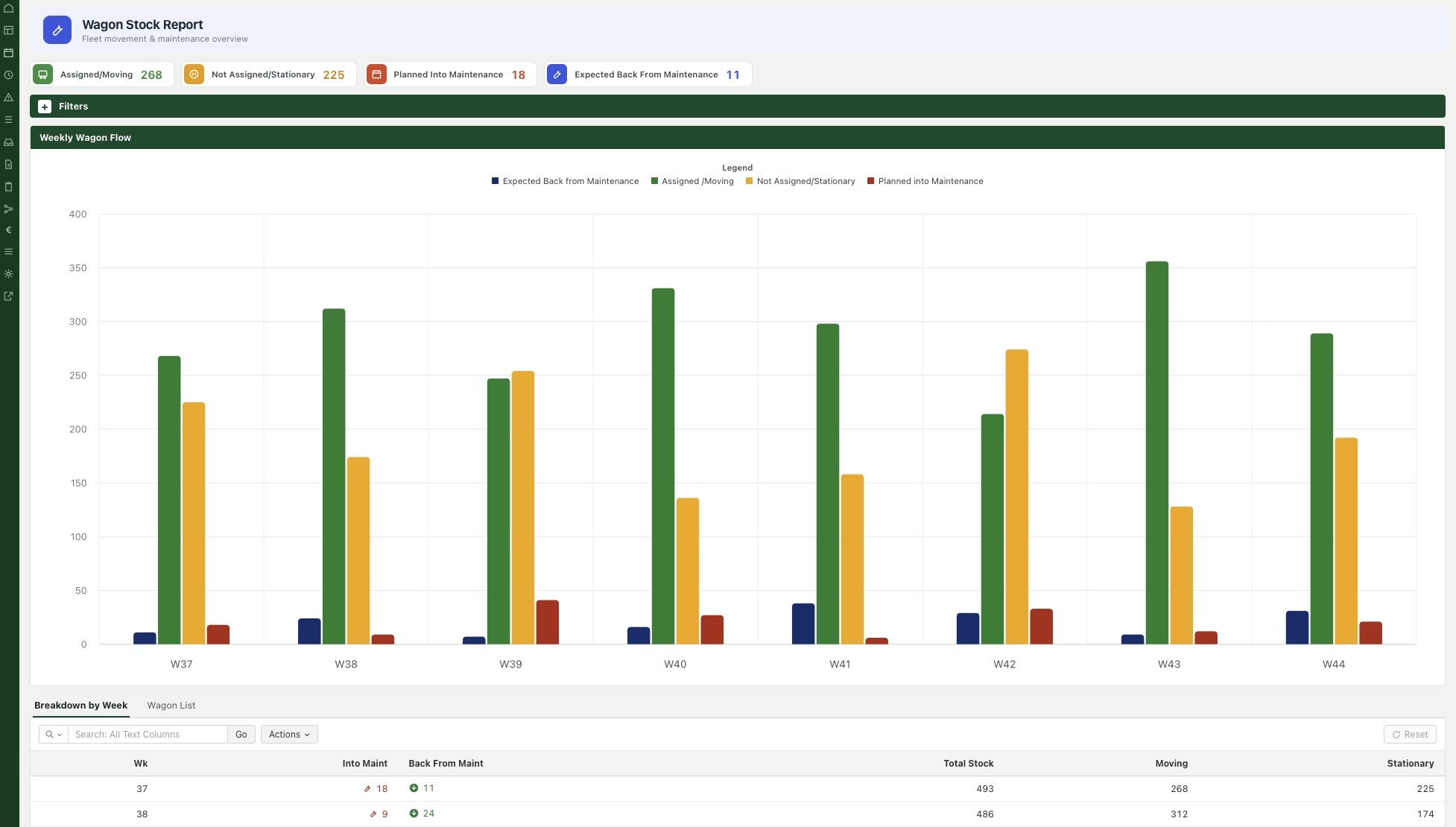
Preventive maintenance planning driven by telematics counters, mileage, and time limits. Configurable intervals per wagon type, automated lead times, maintenance windows tracked across the full fleet. Workshop coordination with documentation, approval workflows, and audit trail. Restriction and maintenance blocks enforced automatically, wagons can’t be assigned to orders while they’re out.
KEY FEATURES
Maintenance that the operation plans around, not against.
Telematics counters trigger the plan; the workshop coordinates the work; dispatch sees what is available and what is out, so fleet, workshops, and operations stop fighting each other for the same wagon.
PLANNING
Plans built on usage, not on memory.
Maintenance intervals run off the data the wagon is already sending, telematics counters, mileage, and time limits. Each wagon type carries its own rules. Each rule produces its own lead time. The plan stays current without anyone re-doing the calendar at month-end.
Maintenance windows across the full fleet sit on one timeline, so the head of fleet sees the whole picture, not a stack of per-workshop spreadsheets.

WORKSHOP
Workshops on the same page as fleet.
Every maintenance event runs through one workflow: scheduling, documentation, approvals, and the audit trail behind them. Own workshops, contract workshops, and external partners all work from the same record, so the wagon does not get lost between two systems.
ECM-ready audit trail throughout, for wagon keepers and the operators they run for. The compliance evidence is a by-product of the work, not a separate file to assemble.
Documentation per event
Photos, work orders, parts lists, certificates, attached to the wagon record at the event, not scattered across email and shared drives.
Approval workflows
Per-line-item approval with auto-approval thresholds you control. Routing rules for cost ranges, wagon types, and customer-related fleets.
ECM-ready audit trail
Every event, decision, and document logged in sequence, ready for the keeper, the operator, and the regulator.
AVAILABILITY
Out-of-service wagons stay out of service.
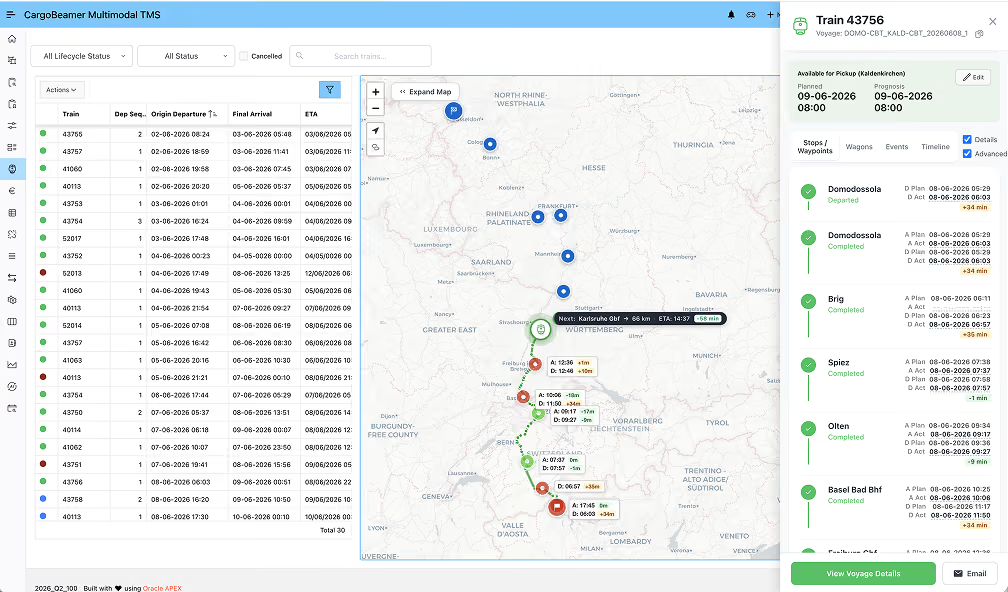
Restriction and maintenance blocks enforced automatically, a wagon scheduled for the workshop can’t be assigned to an order, full stop. Dispatch sees the block at the moment of planning, not after the train has already been built.
Availability lives where dispatch already looks: on the planboard, in the wagon list, in the customer view. One source of truth on what can run, what can’t, and when each one comes back.

SEE IT LIVE
Bring your maintenance backlog. We’ll plan it.
A 30-minute walkthrough on your real maintenance schedule - wagons, intervals, workshops, blocks - with a Rail-Flow fleet specialist.
Frequently asked questions.
Five questions every head of fleet and ECM officer asks before automating the maintenance plan. Anything missing? Just ask during your demo.
Haben Sie eine Frage, die hier nicht beantwortet wird? Melden Sie sich bei uns, wir antworten innerhalb eines Werktages.

Drei Auslöser, je Wagentyp konfigurierbar: Telematikzähler (Laufleistung vom Gerät), Fristen (kalenderbasiert für Inspektionen, Zertifizierungen, Revisionen) und Zustandsereignisse, sofern das Gerät sie unterstützt. Die Regeln lassen sich kombinieren; welche zuerst auslöst, erzeugt das Wartungsereignis mit der passenden Vorlaufzeit.
Alle drei. Eigene Werkstätten, Vertragswerkstätten und externe Partner arbeiten über denselben Workflow, dieselbe Dokumentation, dieselben Genehmigungsregeln und denselben revisionssicheren Nachweis zusammen. Externe Partner erhalten einen eingegrenzten Zugriff, ohne die übrige Flotte zu sehen. Weiterleitungsregeln je Werkstatt, Wagentyp und Kostenbereich lassen sich in der Oberfläche konfigurieren.
Jedes Wartungsereignis, jede Entscheidung, jedes Dokument und jede Genehmigung wird in zeitlicher Abfolge auf dem Wagendatensatz protokolliert. Der ECM-fähige revisionssichere Nachweis entsteht als Nebenprodukt der Arbeit, nicht als separate Compliance-Übung. Heute im Einsatz bei Wagenhaltern und den Betreibern, für die sie tätig sind. Exportierbar je Wagen, Zeitraum oder behördlicher Anfrage.
Die Sperre kann übersteuert werden, denn die Praxis kennt Ausnahmen, doch jede Übersteuerung wird mit Begründung, Genehmiger und Zeitstempel protokolliert. Der revisionssichere Nachweis bleibt intakt, der Wagendatensatz zeigt die Übersteuerung, und das ursprüngliche Wartungsereignis bleibt offen, bis die Arbeit abgeschlossen ist. Nichts umgeht eine Sperre unbemerkt.
Die Verfügbarkeit fließt auf das TMS-Planboard, gesperrte Wagen werden im Moment der Zuweisung ausgegraut, mit dem Rückgabedatum beim Überfahren mit der Maus. Master Data & Telematics speist die Auslöser; Damage Management kann einen Schaden in ein Wartungsereignis überführen. Starten Sie eigenständig oder als Teil von Fleet Management.
MORE FROM FLEET MANAGEMENT
Explore related features.
Discover the other Fleet Management capabilities that feed Maintenance & Availability Planning, and the way availability flows into the rest of the Rail-Flow platform.
Master Data & Telematics
Wagon master data from RSRD² in one step. Live position, mileage, and condition from telematics, the record every damage attaches to.
Damage Management
Damages captured digitally with GCU / AVV-standard codes, routed to contract workshops, approved per line item. Damages can promote straight into maintenance events.
Transport Management (TMS)
The operating layer for rail and intermodal logistics. Live wagon availability from the fleet record feeds dispatch, planning, and the customer view, every wagon visible end to end.