

Logistics Summit Startup Awards 2022 powered by BLG - Railflow
Co-founder Dominik Fürste took the stage to show how Rail-Flow is turning a fragmented industry into a connected, digital marketplace — and why that's good news for the climate.
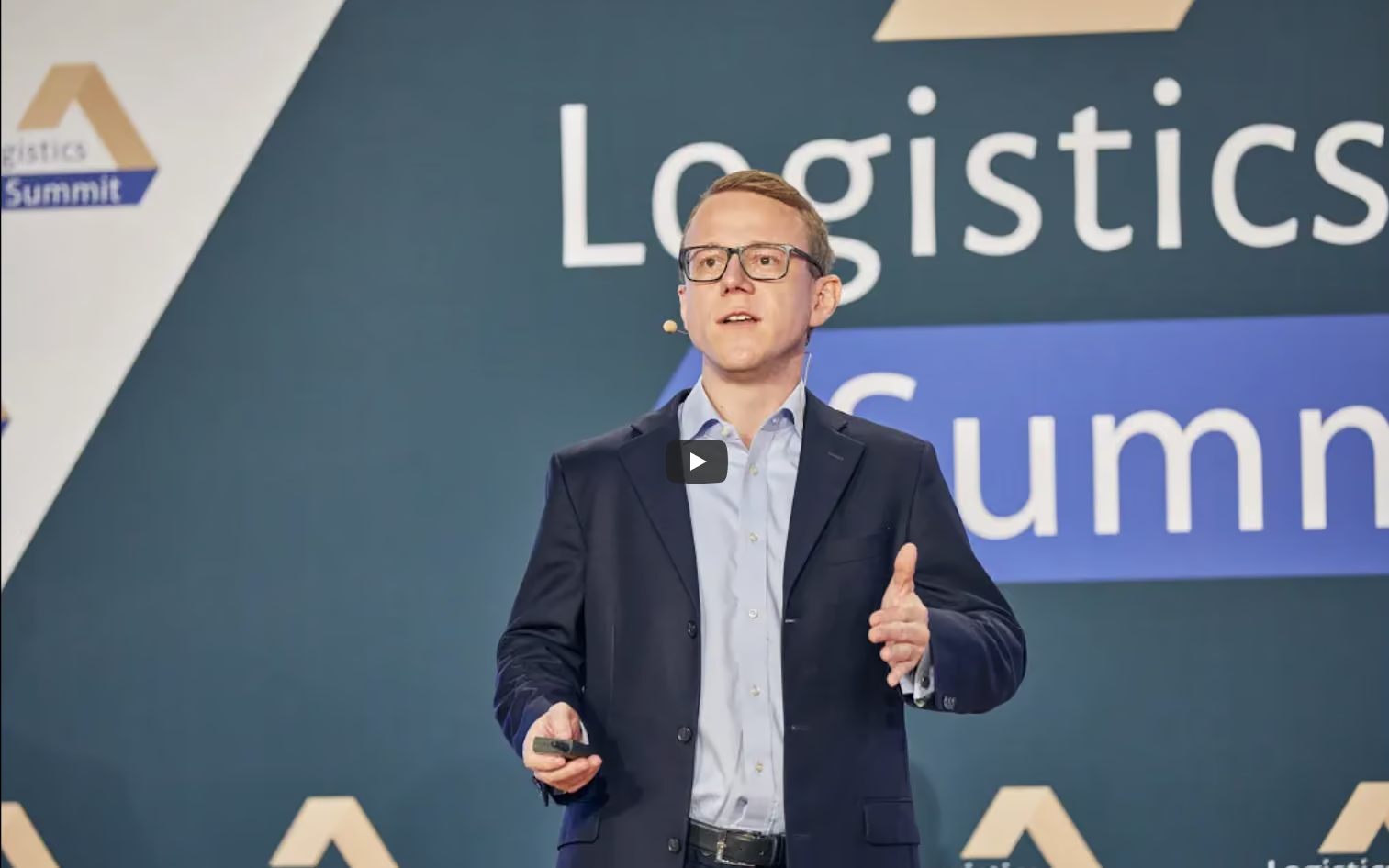
Rail-Flow was a guest at the Logistics Summit Startup Awards 2022, powered by BLG – and right in the middle of it: our co-founder Dominik Fürste, who presented the company to an audience of logistics industry professionals.
His pitch focused on how Rail-Flow aims to make rail freight transport more digital, more transparent, and more efficient.
What the Pitch Was About
Digitalizing Rail Freight Transport: Rail freight transport is still widely seen as complex and fragmented. Rail-Flow addresses exactly this challenge and aims to simplify the underlying processes.
Connecting All Stakeholders:The platform brings together shippers, freight forwarders, rail operators, and other stakeholders, making existing transport capacity easier to use.
More Efficiency, Lower Costs: Digital tools are designed to speed up booking processes, capacity planning, and communication between all parties involved, while reducing sources of error.
A Contribution to Sustainability: Shifting more freight onto rail is one of the most effective levers for reducing CO₂ emissions in the transport sector – and a central argument for the platform.
Watch the full presentation here:
.avif)