

INVOICING & COMMERCIAL CLOSING
Close every transport. Faster.
Every transport closes on the actual service performed, not on what was originally booked. Billing lines auto-match against contracts, and execution records, so post-calculation and invoicing run in days instead of weeks. Mode comparisons fall out of the same data, ready to send to customers, auditors, and management.
KEY FEATURES
From executed transport to invoice.
Closing runs on the data the system already has, such as contracts, and execution records. Reconciliation, billing, and reporting from one source. Finance stops chasing operations, operations stop chasing finance.
RECONCILIATION
What you booked, what actually moved.
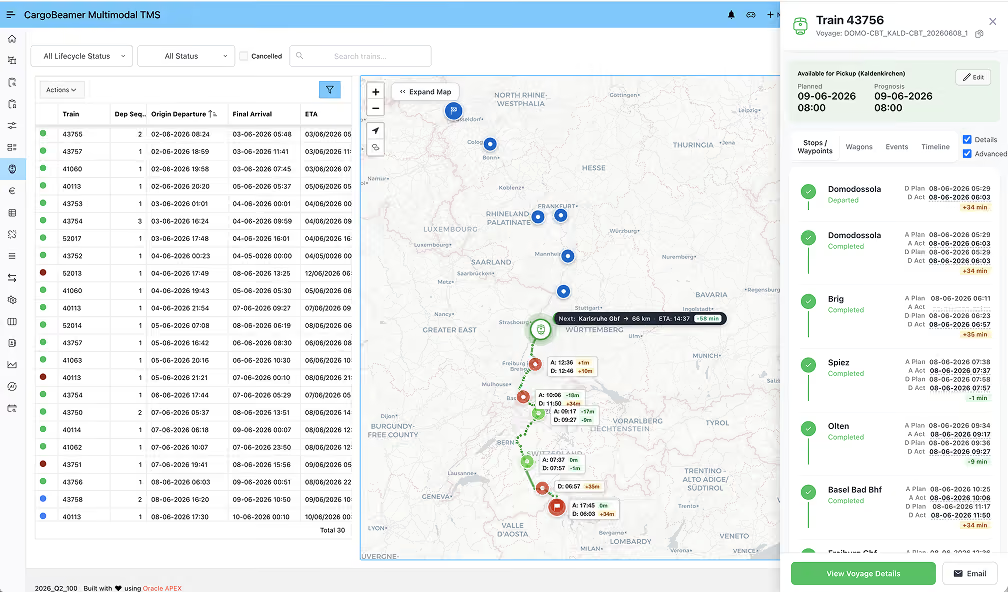
Every transport closes on the actual service performed. Planned vs. executed reconciled automatically against the dispatch record, the track-and-trace events, and the partner’s confirmation, so the closing line reflects the train that actually ran, not the one originally booked.
Differences surface where they happen: wagons added, slots missed, penalties triggered, deviations absorbed. Each one shows up on the closing record with the underlying evidence attached.

Billing
Invoices in days, not weeks.
Billing lines auto-match against contracts, and execution records. Rates, surcharges, fuel indices, and customer-specific terms applied at the line level the moment the transport closes, on every shipment, every leg, every partner.
Customer invoices, supplier invoice verification, and self-billing all run on the same closing record. The system fetches and matches automatically; finance reviews exceptions, then approves and finalizes.
Contract-driven billing logic
Rates, surcharges, fuel indices, and customer-specific terms applied automatically per contract no spreadsheets.
Supplier invoice verification
Incoming partner invoices matched line-by-line to the closing record. Disputes flagged with the underlying evidence already attached.
E-invoicing & ERP handover
TMS delivers output to SAP, Microsoft Dynamics, Oracle, or PEPPOL via an integration configured to each customer's setup rather than a fixed connector, keeping your ERP as the definitive system of record while it handles the reconciled numbers upstream.
REPORTING
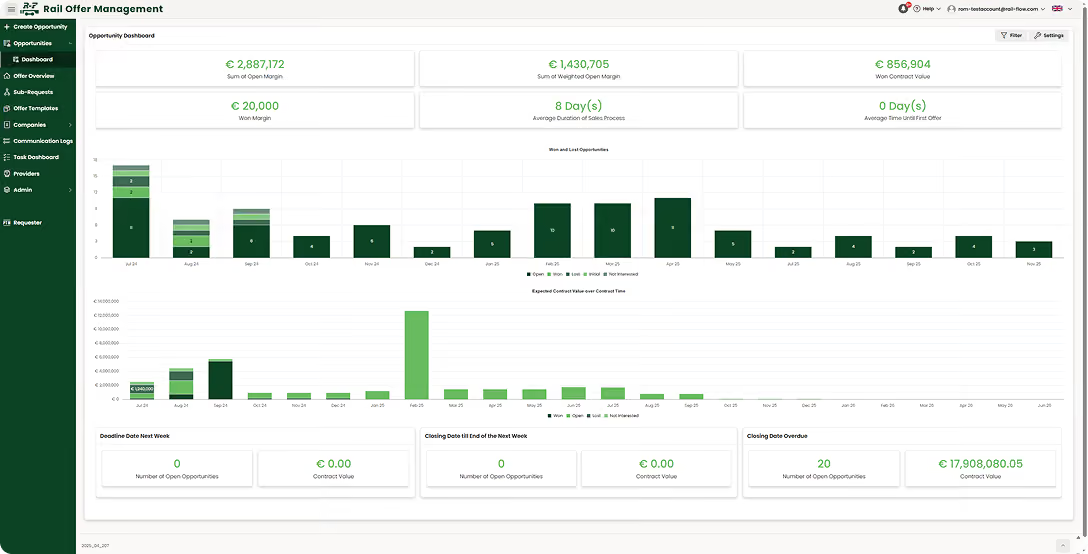
KPIs from one record, with CO₂ via integrated emissions data.
Operational KPIs fall straight out of the closing record: punctuality, utilisation, cost, and margin, with no separate BI project and no late-night spreadsheet to reconcile what actually ran. For emissions, route and execution data feeds an integrated calculation service, so CO₂ per shipment and rail-vs-road comparisons come from the same underlying records rather than a parallel sustainability exercise.
One data foundation for the customer report, the auditor file, and the management deck.

SEE IT LIVE
Bring one closing month. We’ll run it through.
A 30-minute walkthrough on your actual reconciliation pain - surcharges, deviations, supplier invoices, or CO₂ reports - with a Rail-Flow rail freight specialist.
Common questions about Invoicing & Commercial Closing.
Five questions every head of finance and head of operations asks before turning automated closing on.
Have a question that's not covered here? Reach out and we'll get back to you within one business day.

Block trains, single wagon loads, intermodal moves, and combined rail-road shipments, as long as the booking and the execution record live in the TMS. Multi-leg, multi-partner, multi-mode shipments all close on the same record. Manual closings remain available for one-off transports outside the contract base.
Rates per lane, equipment, customer, and time window. Surcharges by index (fuel, energy, currency), by event (additional wagons, missed slots, DG handling), and by contract clause. Customer-specific terms and slot agreements applied automatically.
CO₂ per shipment is calculated from real execution data - traction type, distance, payload, and route. Rail vs. road comparison runs on the same data. Methodology certification (GLEC, EN 16258) is on the roadmap; the figure today is auditable per shipment and suitable for customer reports and modal-shift cases.
Closing pauses on that record with the missing field flagged, a missing GPS event, an unconfirmed handover, a partner invoice without evidence. The case reaches finance with the exact gap pinned. Once the data lands or is entered manually, the record rejoins the flow. Nothing closes silently on incomplete data.
Invoicing & Commercial Closing is the last stage of the TMS. Closing records pull from the planboard, Track & Trace, and the contract base, and deliver output to SAP, Microsoft Dynamics, Oracle, or PEPPOL via an integration configured to each customer's setup rather than a fixed connector. Your ERP stays the system of record.
MORE FROM TRANSPORT MANAGEMENT
Explore related features.
Discover the other capabilities of the Transport Management solution that feed Invoicing & Commercial Closing with the data it needs.
Real-Time Track & Trace
Live ETAs, proactive exception alerts, and full transport visibility from departure to delivery. Every execution event feeds the closing record.
Automated Order Processing
Turn every booking — EDI, portal, email, or Excel — into a validated, dispatched shipment without manual touch. The data that closing runs on starts here.
Contract Management
Customer and supplier contracts, slot agreements, and pricing structures in one place — the rate basis every closing line reconciles against.