

Calculator 2.0
Rail Offers, Built to Move.
Create standardized, multilingual offers for block trains, single wagon loads, intermodal units, single services and asset rentals, powered by ready-made templates and text blocks. Rail-specific data like locations, NHM & RID, and wagon types are built right in, so every offer reflects your expertise from the first click.
KEY FEATURES
A calculator that knows what rail freight runs on.
Stretch-by-stretch pricing with rail cost components built in; overhead, risk, margin, and subsidies layered on top; every calculation kept in one place so sales never re-quotes the same lane from scratch.
COST COMPONENTS
The lane, segmented. The costs, rail-real.
Every transport lane prices stretch by stretch, up to 8 segments per routing, on the cost components rail freight actually runs on. Locomotives, wagons, personnel, traction, energy, services, even in foreign currency. Not a generic logistics calculator forced to fit.
All cost components carry the right cost structure. Different price models available to fit your needs.

MARGIN LOGIC
From cost base to sales price. Visibly.
Apply overhead. Apply risk. Calculate the margin you actually need, separatly for internal and external costs. Derive the sales price the customer sees. Add subsidies where they apply. The path from cost base to sales price is on one screen, not in a head of sales’ private spreadsheet.
When the result is right, transfer it straight to the offer document. No re-keying, no copy-paste mistakes, no margin lost between the calculator and the offer.
Overhead & risk layered on
Apply overhead and risk uplifts per cost component, per segment, or per offer. The cost-to-price logic is rules-based, not gut feel.
Margin & subsidies
Calculate margin against the cost base. Add subsidies where they apply (one-time, per transport, per km). Sales price falls out automatically.
Direct transfer to offer
Send the sales price straight into the offer document. No double entry, no margin guesswork in the PDF.
LIBRARY & PRICELISTS
One library. Every pricelist and calculation in one library.
All cost components can be stored in individual price lists with own validity dates. No outdated costs to be used.
Every calculation lives in one library, so sales never re-quotes the same lane from scratch, never reconciles two versions of the same routing, never loses the calculation that won a tender last quarter.
Reuse, version, compare, audit. Pricing decisions stay traceable from the cost component all the way through to the offer the customer signed.

SEE IT LIVE
Bring one lane. We’ll price it stretch by stretch.
A 30-minute walkthrough on your actual lane - segments, cost components, overhead, margin, subsidies - with a Rail-Flow sales specialist.
Frequently asked questions.
Five questions every head of sales and pricing manager asks before moving rail freight pricing off spreadsheets. Anything missing? Just ask during your demo.
Have a question that's not covered here? Reach out and we'll get back to you within one business day.

Block trains and single wagon loads, for manual request and requests coming from the PTM platform. Routings build up to 8 segments per lane, multi-country, multi-traction, multi-mode where the train demands it.
Cost rates configure in the price list section: per locomotive type, per traction provider, per country, per period. Personnel and overhead schemes carry your own logic. Foreign-currency rates pull from your configured FX source. New components and rules can be added by your team, not by a release cycle.
Yes. Per-country track-access charges, traction costs, and personnel rates flow into the lane segment that crosses the border. Subsidies for multi-country, mode-shift, and gross-tonne-km schemes apply at the routing or the segment level. The sales price reflects all of it without anyone running a side calculation.
One click. The result of the Calculator transfers straight into the offer document generated from your multilingual templates, routing, segments, cost summary, margin, and final sales price all populated. Edit wording in the document; the price stays linked to the underlying calculation in the library.
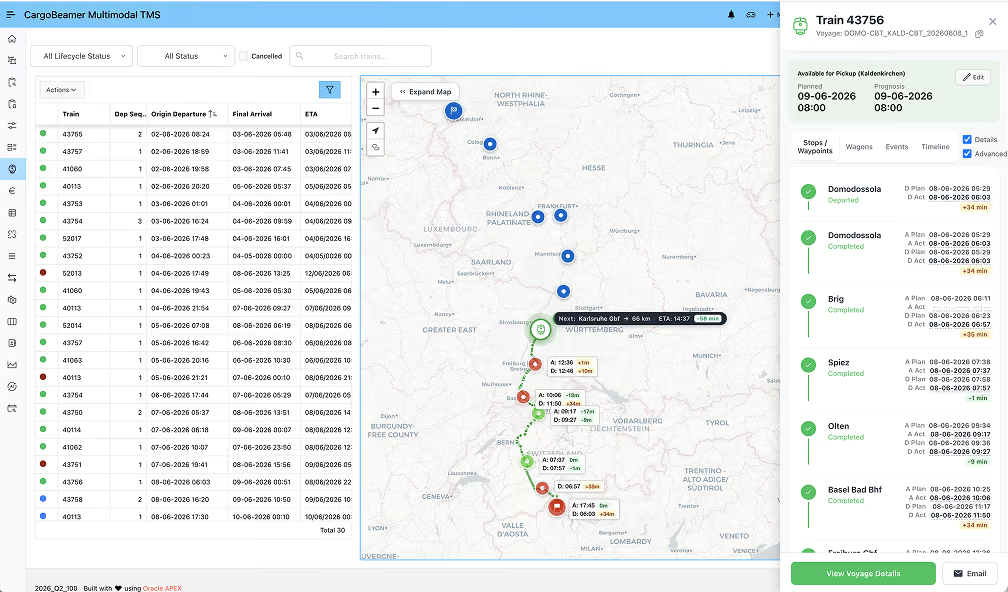
PTM tender requests flow into ROM with the routing pre-populated. Won offers transfer to the TMS for execution. Calculator is the pricing engine; the platform supplies the data and consumes the result.
MORE FROM ROM & RAIL-FLOW
Explore related features.
Discover the other ROM capability that runs alongside Calculator 2.0, plus the two adjacent products that feed and consume what the Calculator produces.
Opportunities, Pipeline & Forecasting
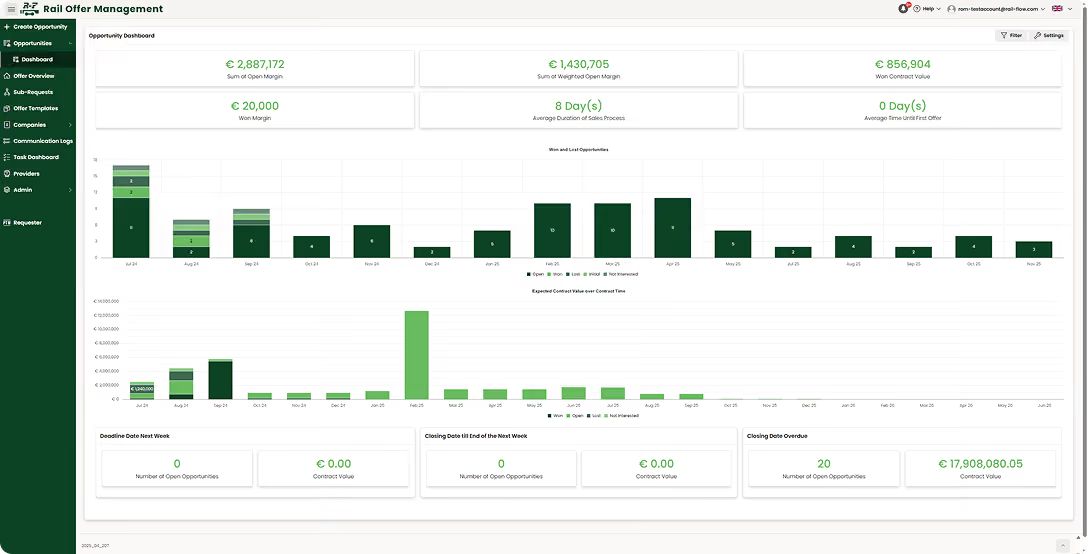
Track every tender from qualification to award. Configurable sales pipeline reflecting your organisation’s stages. Calculator prices the offers; this is where they live in the pipeline.
Purchase & Tender Management (PTM)
315+ rail providers across 27 countries. Tender requests flow straight into ROM with routings pre-populated for the Calculator, no re-keying customer data.
Fleet Management
Real wagon availability can be maintained in our fleet management system. Master data, telematics, and maintenance live behind it.